At 3 pm, the bell would ring out for the final time, signalling the end of another school day. The sound of scraping chairs and excited voices, slowly rising, swiftly followed as children packed their bags, waved their goodbyes and set off on the journey home.
For many students at Laukanu Primary School, study would have to be put aside till morning. Without access to reliable electricity, the dim, flickering light cast by diesel generators and kerosene lamps made homework all but impossible after dark.
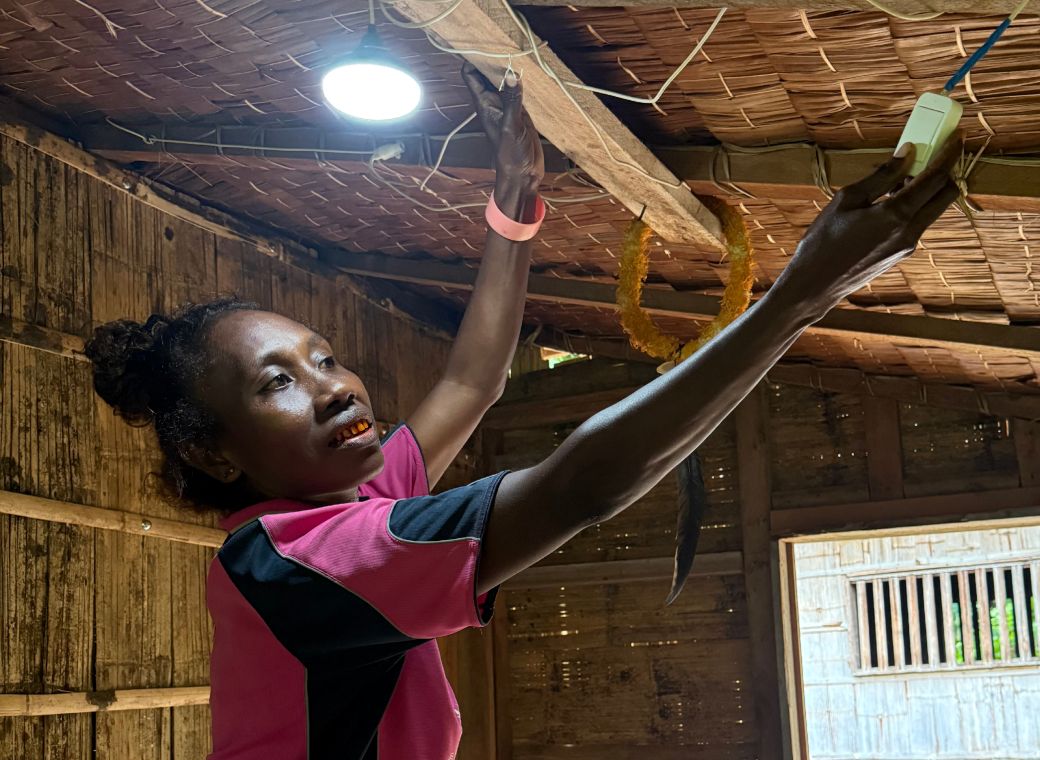
But solar power has changed all that. The Light for Learning (Phase 3) project installed over 8,000 solar energy systems in 37 remote villages on Morobe Province’s north-eastern coastline. Now, with solar energy lighting up their homes, children in Laukanu Village can study whenever they want, for as long as they want.
Noelyn Kahata, a Grade 7 teacher at Laukanu Primary School, has already seen a renewed commitment to education, and not just from her students. Every evening at 7 pm, she rings the school bell 10 times, reminding children that it’s time to get on with their homework.
“After I ring the bell, I can hear the parents telling all the children to get back home and do their readings,” said Noelyn.
Noelyn is a typical teacher. She’s still there – at 7 pm – ringing the bell. And while students are working away under solar lights, so are their teachers, marking assignments and preparing lessons for the following day.
But it’s not just the lights that are making a difference. With solar power keeping laptops and phones charged, digital teaching resources are available at the click of a mouse or the swipe of a screen.
“We use our phones every day, Monday to Friday. We teach the new Standards-Based Curriculum and follow the online teachers’ guides, but we don’t have hard copies, we use online apps instead,” said Noelyn.
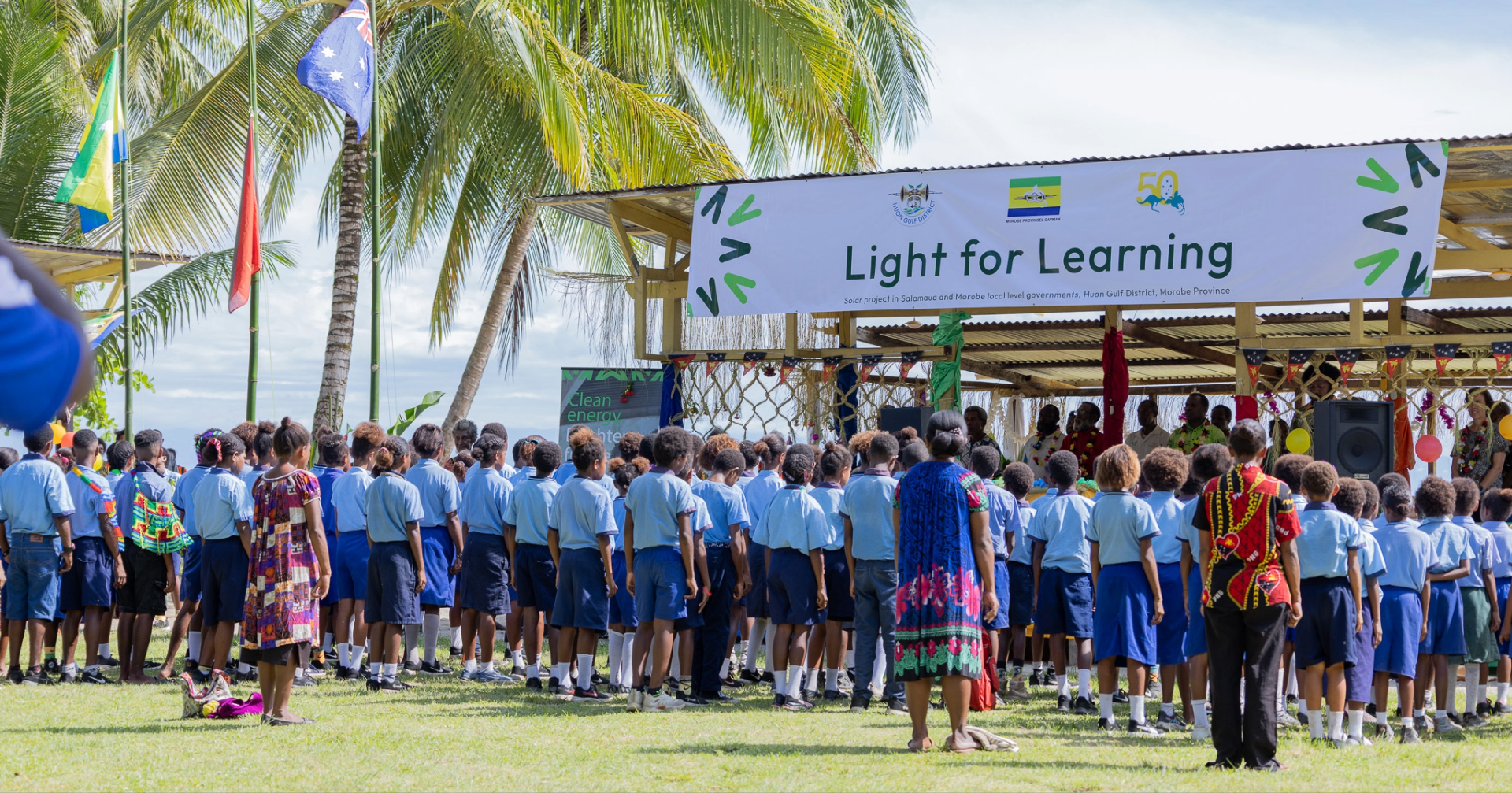
The Light for Learning project, implemented by Australia’s Pawarim Komuniti Partnerships Program and the Kokoda Track Foundation, installed solar systems for 8,095 homes and 273 community facilities across Huon Gulf District.
The project is already making an impact. Noelyn has seen a marked improvement in her students’ attendance and performance, and test scores are on the rise. But above all, it has brought opportunity – the opportunity for children to reach as far as their talents take them.